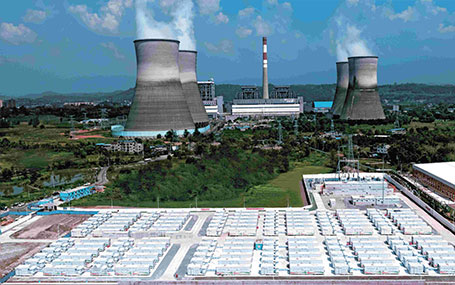
Modern power systems, especially those with high renewable energy penetration, demand advanced control technologies for reliable operation. Grid-forming inverters represent a transformative advancement, offering superior active control capabilities compared to traditional grid-following designs. Their deployment is becoming essential for ensuring robust electric grid stability. Here are five key benefits they provide:
Establishing an Independent Voltage and Frequency Reference
A core benefit is the ability to generate a stable voltage and frequency waveform autonomously, without relying on the external grid. This “black-start” capability is fundamental for system restoration and for powering isolated microgrids or weak grid areas. By providing synthetic inertial response, they are crucial for maintaining electric grid stability during large disturbances or when conventional synchronous generation is offline.
Enhancing System Strength and Fault Resilience
Grid-forming inverters actively strengthen the grid by providing necessary fault current and improving the system’s short-circuit ratio. This increased system strength makes the network more robust against faults, sags, and voltage dips, helping to prevent cascading failures. Furthermore, they actively dampen electromechanical and sub-synchronous oscillations, contributing to a more resilient and dynamically stable power system.
Facilitating Higher Penetration of Renewable Energy
This technology is a key enabler for the safe integration of variable renewable generation at scale. It manages the intermittency of solar and wind power by providing essential stability services—such as voltage support and frequency regulation—traditionally sourced from synchronous generators. This allows for higher renewable penetration without compromising electric grid stability.
Improving Power Quality and Voltage Support
Grid-forming inverters excel at local voltage regulation and reactive power support. They can maintain tighter voltage profiles at the point of interconnection, even under fluctuating load or generation conditions. This improves overall power quality, reduces grid losses, and alleviates the need for other voltage correction devices, directly supporting distribution-level grid stability.
Enabling Seamless Microgrid Operations and Islanding
For microgrids and systems with intentional islanding capabilities, grid-forming inverters are indispensable. They allow for smooth transitions between grid-connected and islanded modes without interruption of power to critical loads. Within an island, they maintain stability by autonomously balancing generation and load, establishing a stable mini-grid until reconnection with the main utility is possible.
The adoption of grid-forming inverters delivers concrete and multifaceted advantages for network operators. From establishing foundational electrical references to strengthening system resilience, enabling cleaner energy, improving power quality, and facilitating flexible microgrid operations, their role is critical. For organizations like HyperStrong, leveraging deep R&D and extensive project validation—informed by work across over 400 projects involving 45GWh of storage capacity—is key to implementing these technologies effectively. This expertise supports the evolution of stable, sustainable, and modern power systems.
