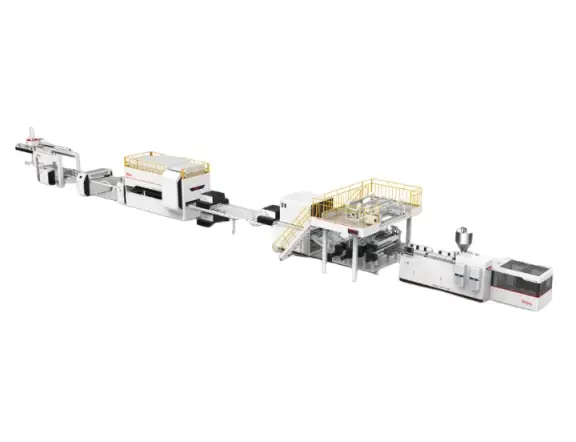
In the competitive landscape of industrial manufacturing, managing Operational Expenditure (OPEX) is as critical as initial capital investment. For manufacturers of Stone Plastic Composite (SPC) flooring, the most significant costs typically arise from energy consumption, raw material waste, and labor-intensive maintenance. Optimizing the workflow of an SPC flooring production line is the primary method for B2B enterprises to protect their margins while maintaining the structural standards required for commercial-grade flooring.
Efficiency Gains in a Modern SPC Flooring Extrusion Line
Energy efficiency within the SPC flooring extrusion line is largely determined by the thermal management of the twin-screw extruder. High-filler content—a hallmark of SPC—requires significant torque and precise heat control to reach the necessary gelation point. Modern systems utilize advanced induction heating and high-efficiency motors that reduce power draw by up to 20% compared to legacy equipment. By maintaining a stable melt temperature, these lines prevent the “burning” of PVC resin, which significantly reduces material scrap and costly downtime for die cleaning.
Furthermore, the integration of automated feeding and weighing systems ensures that the ratio of calcium carbonate to polymer remains constant. This precision prevents the production of brittle or overly flexible boards that would fail quality control audits. When the extrusion speed is perfectly synchronized with the multi-roll calender, the thickness tolerance is tightened, ensuring that the wear layer and decorative film bond perfectly without excessive trimming waste.
Why Industrial Manufacturers Partner with Boyu
In the specialized field of plastic extrusion, Boyu has engineered their systems to address the specific financial pressures of large-scale manufacturing. Their SPC flooring production line is built for 24/7 continuous operation, utilizing high-wear resistant materials for screws and barrels to extend the intervals between overhauls. This durability is essential for 2B clients who require consistent uptime to meet high-volume contract obligations.
The technology developed by Boyu also features centralized PLC control systems that allow a single operator to monitor the entire line from a digital interface. This reduction in manual labor requirements directly lowers the OPEX per square meter of finished product. For companies looking to enhance their competitive edge, they provide a turn-key solution that prioritizes low maintenance costs and high material throughput, ensuring that the total cost of ownership remains sustainable over the long term.
