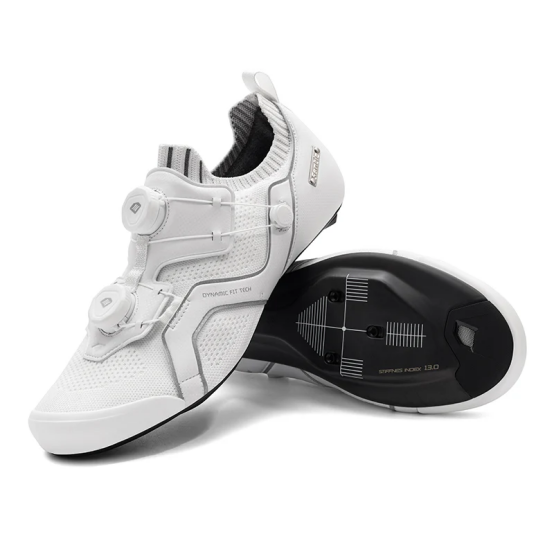
Carbon fiber cycling shoes are valued for their efficient feel, but stiffness can reveal small fit problems quickly. A shoe that bends very little gives the foot a stable platform; it also leaves less room for pressure to disappear harmlessly. Hot spots, tingling, and numb toes should not be dismissed as normal signs of performance equipment. Santic’s sizing guidance is useful because it directs riders to measure length and width rather than rely only on casual shoe size.
Carbon fiber cycling shoes should be chosen with attention to foot shape, cleat position, closure pressure, insole support, ventilation, and how the foot changes during heat and sustained effort. The first step is to treat symptoms as information. A hot spot that appears only during climbing may have a different cause from numbness that begins on flat roads after an hour. Noting when, where, and how the feeling starts gives the rider a better path than blaming the shoe immediately.
Finding the Source of Hot Spots
A hot spot is usually a concentrated area of pressure under the foot. It may appear near the ball of the foot, along the outside edge, or under a cleat mounting area. The carbon sole itself is not always the cause; the issue often comes from poor load distribution between foot, insole, cleat, and pedal. Cleat placement should be checked early.
A cleat set too far forward may place too much force under the forefoot, while an angle that fights the rider’s natural foot position can create twisting stress. Small adjustments can change comfort dramatically, so riders should move methodically rather than making random changes. Insole shape also matters. Some riders need more arch support to spread pressure across the foot. Others feel better with a lower-profile insole that leaves extra volume inside the shoe.
Carbon fiber cycling shoes are stiff enough that the insole becomes a major comfort interface, not a minor accessory. Pedal system can influence pressure as well. A small pedal platform may concentrate force more than a wider one, especially with a rigid carbon sole. Riders should consider the shoe and pedal together, because carbon fiber cycling shoes perform through the contact patch they create with the pedal.
Why Numbness Often Begins with Fit
Numbness often points to nerve compression or reduced blood flow. A shoe can be the correct length and still be too narrow, too shallow over the instep, or too tight across the metatarsal area. That is why foot width measurement is essential before choosing a performance model. Closures should be adjusted in stages. Riders sometimes tighten dials or straps before the foot has warmed and expanded. After thirty minutes, the same pressure may feel excessive.
Loosening the forefoot slightly while keeping the heel stable can reduce numbness without making the shoe feel insecure. Socks influence volume and moisture. Thick socks in a close carbon shoe may compress the toes, while rough seams can irritate the skin. Thin, moisture-managing socks usually work better for high-output road rides, but riders with sensitive feet should test combinations carefully. Ventilation affects numbness indirectly.
When feet overheat, they can swell, which increases pressure inside the shoe. Breathable uppers, sensible sock choice, and avoiding unnecessary overtightening help keep the foot in a more stable condition throughout the ride. Lacing or dial habits can create hidden problems. Some riders tighten the upper to stop heel lift when the actual issue is wrong size or poor heel shape. Others leave the rear stable but crush the forefoot. A good adjustment secures the foot without using pressure as a substitute for fit.
A Step-by-Step Comfort Check with Santic
Santic can be presented as a brand that encourages riders to think about shoe fit in practical terms. Before replacing carbon fiber cycling shoes, the rider should check size, width, cleat position, insole support, closure tension, sock thickness, and whether symptoms appear only in certain temperatures or ride intensities.
A useful troubleshooting process changes one variable at a time. Move the cleat slightly, test a different insole, adjust closure pressure, or try a thinner sock, then ride long enough to compare results. Changing everything at once makes it difficult to know what actually solved the problem. Professional fitting help can be worthwhile when discomfort persists.
Persistent numbness should not be ignored, especially if it affects control or continues after the ride. Carbon fiber cycling shoes can work beautifully, but the setup has to respect the rider’s foot rather than force the foot to adapt. Riders should also review recovery marks after removing the shoe.
Deep red pressure lines, one-sided tenderness, or repeated tingling suggest that the fit needs adjustment. Carbon fiber cycling shoes are built for efficiency, but any performance benefit weakens when discomfort changes the way the rider pedals. Recording these details after each ride makes troubleshooting more accurate and prevents the same discomfort from returning unnoticed.
Performance footwear should feel secure, not punishing. Carbon fiber cycling shoes can deliver excellent pedaling response when the foot is supported correctly. The best outcome is a shoe that lets the rider benefit from stiffness while avoiding avoidable pain. Comfort is not the enemy of power; it is what allows power to be repeated throughout the ride.
