Dental laboratories depend on reliable digital production to meet increasingly demanding requirements for accuracy, turnaround time, and customized output. An LCD resin 3D printer can support efficient production of dental models and other resin-based components, but aging equipment may eventually become a bottleneck. Recognizing the warning signs early can help laboratories determine when an upgrade is justified and select technology that better supports current production demands.
- Printing Takes Too Long for Your Workload
Production speed is one of the clearest indicators that an LCD resin 3D printer may no longer meet a laboratory’s needs. As order volumes increase, equipment that was once sufficiently fast can create bottlenecks, especially when multiple models must be produced within a limited schedule.
The issue is not simply the printer’s advertised speed. Laboratories should consider the complete production cycle, including file preparation, printing, washing, curing, and finishing. If technicians frequently have to wait for builds to finish before starting subsequent work, upgrading can improve overall equipment utilization.
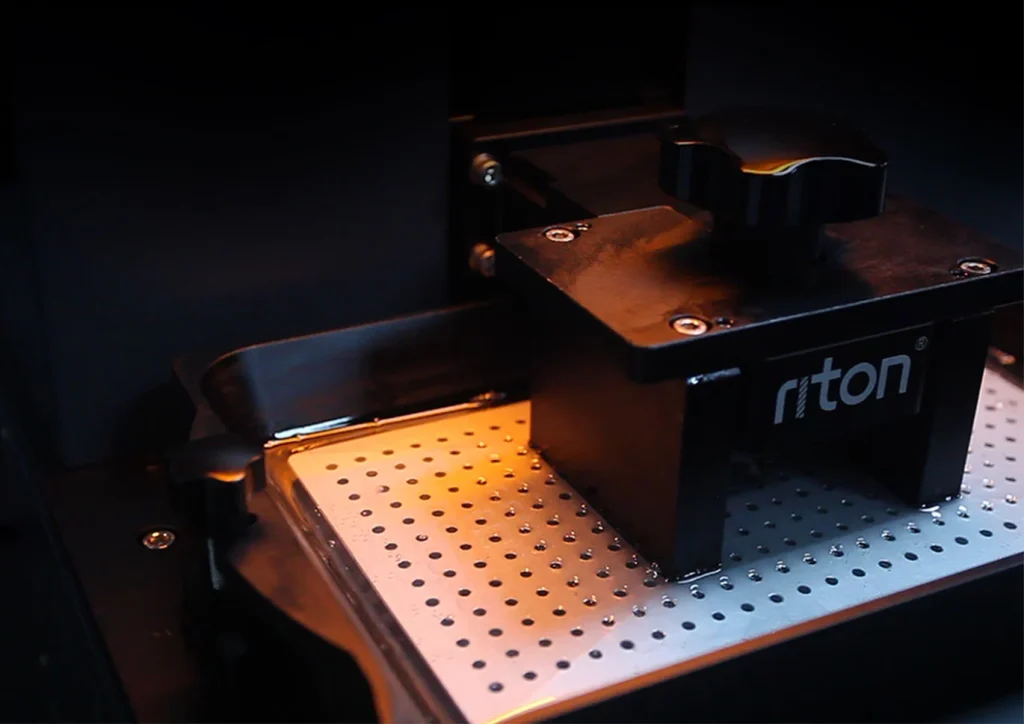
Riton’s RXDent-L230 is designed for high-speed dental resin production. Per official specifications, its average layer printing time is listed at just 1–8 seconds, helping shorten production cycles while supporting larger batch requirements.
- Printed Models No Longer Reproduce Fine Details
Accuracy is fundamental to digital dental manufacturing. When an older printer begins producing visible artifacts, rough edges, inconsistent features, or dimensional deviations, these issues can increase finishing work and potentially affect downstream processes.
LCD systems rely on precise light exposure to cure resin accurately. Optical performance, pixel resolution, calibration, resin characteristics, and printing parameters can all influence the final result. Research into dental resin printing has shown that printing accuracy can vary according to manufacturing conditions and post-processing procedures.
A clear resin 3D printer can be particularly demanding when transparent or highly detailed components are required because visual imperfections can become more noticeable. Laboratories should therefore evaluate not only nominal resolution but also actual print consistency across repeated jobs.
- Light Uniformity Has Become a Quality Problem
Light-source performance is another important upgrade indicator. Uneven exposure across the build area can result in differences in curing, dimensional accuracy, and surface quality between parts positioned in different areas of the platform.
For laboratories producing multiple dental models in one batch, this problem can become particularly costly. A printer may appear productive because it can accommodate numerous parts, but inconsistent exposure can increase inspection, reprinting, and adjustment requirements.
The RXDent-L230 addresses this aspect with a stable light source whose stated light uniformity exceeds 90%. According to Riton, this is intended to reduce dental model printing errors and support accurate reproduction of complex model structures.
- Your Printer Struggles with Larger Batch Production
Another sign that an upgrade may be necessary is insufficient build capacity. Laboratories often begin with smaller workloads and later expand their digital production. A printer that once handled daily requirements may become inefficient when the same platform needs to accommodate substantially more models.
Melting area should be assessed according to actual nesting requirements rather than maximum dimensions alone. A larger platform can allow more components to be produced in one cycle, potentially reducing the number of individual builds required throughout the day.
Per official specifications, the RXDent-L230 offers a molding size of 228 × 128 × 150 mm. For laboratories handling bulk dental model production, this larger format provides additional space for arranging multiple parts while maintaining a focus on resin-based dental manufacturing.
- Your Software Creates More Work Than It Saves
A modern dental printer should simplify production rather than add unnecessary technical steps. If technicians regularly need to move between multiple programs for file preprocessing, machine control, task management, and printing preparation, outdated software can become a hidden productivity cost.
Software integration is particularly important for laboratories with several printers or technicians managing numerous jobs simultaneously. Better task organization can reduce operational complexity and make production easier to monitor.
Riton’s RXDent-L230 is equipped with RTware intelligent software support. The system includes file preprocessing, machine management, and printing task management functions. Riton also states that the software is compatible with mainstream modeling software and incorporates intelligent algorithms intended to simplify printing operations.
Why Anti-Aliasing Matters for Dental Resin Printing
Edge quality is another consideration when assessing an older LCD resin 3D printer. Conventional pixel-based exposure can produce visible stair-stepping along curved or angled surfaces, particularly when models contain intricate dental anatomy.
The RXDent-L230 incorporates 8x anti-aliasing technology designed to create smoother transitions between pixels and reduce jagged edges. For dental laboratories, smoother printed surfaces can contribute to better visual reproduction of model details and potentially reduce the amount of manual finishing required.
This does not mean anti-aliasing alone determines print accuracy. It should be considered alongside pixel size, optical uniformity, layer thickness, resin characteristics, and printer calibration.
How to Decide Whether an Upgrade Is Worthwhile
Laboratories should evaluate equipment performance using measurable production indicators. Track average printing time, failed builds, reprints, finishing labor, maintenance frequency, and the number of parts produced per machine cycle. These figures provide a clearer picture of whether an aging printer is affecting operational costs.
An upgrade becomes more compelling when several problems occur simultaneously. Slow production combined with inconsistent detail, uneven exposure, limited build capacity, and inefficient software can indicate that maintaining older equipment is costing more than expected.
The replacement system should also be selected around future production requirements. Simply purchasing another LCD resin 3D printer with similar specifications may not solve underlying workflow limitations.
Upgrade When Your Production Demands Have Outgrown Your Equipment
An LCD resin 3D printer remains valuable for dental laboratories, but technology should evolve alongside production requirements. Persistent delays, declining detail quality, inconsistent light exposure, inadequate build capacity, and inefficient software are five practical signs that existing equipment may be holding production back.
Per official specifications, Riton‘s RXDent-L230 demonstrates several features aimed at addressing these challenges, including a 228 × 128 × 150 mm molding size, 30 μm pixel size, 7680 × 4320 resolution, more than 90% light uniformity, 1–8 second average layer printing, 8x anti-aliasing, and RTware intelligent software support.
For laboratories considering an upgrade, the objective should not simply be buying a newer machine. The stronger strategy is to identify the production limitations of the current system and select equipment capable of addressing them. That approach can help transform a printer upgrade into a broader improvement in manufacturing efficiency, consistency, and scalability.
