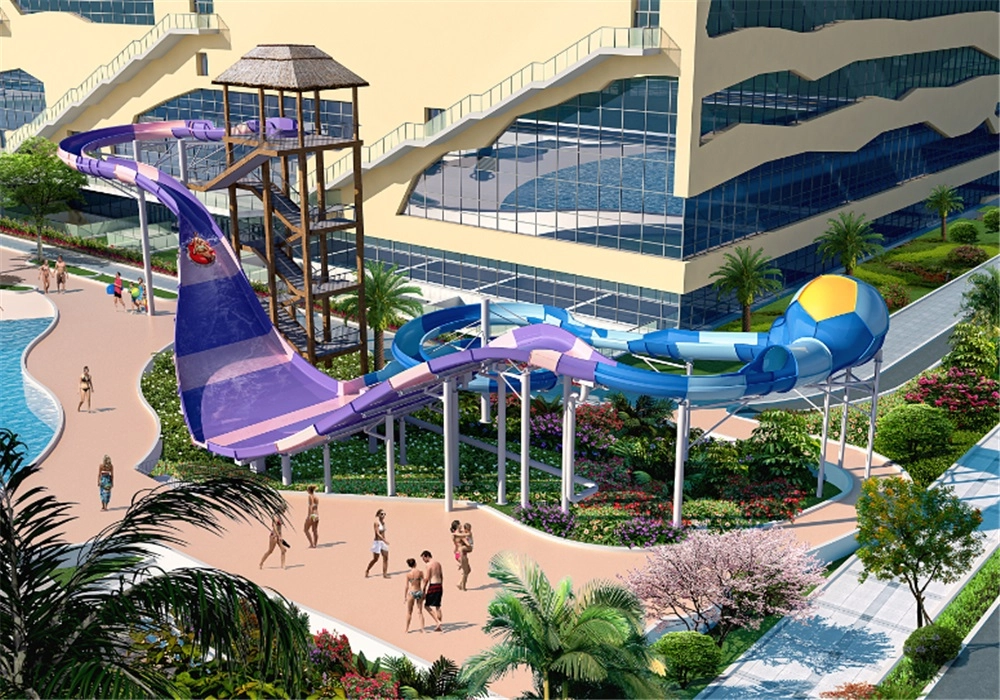
Water slide areas wear out in predictable places: stair treads, platform edges, flume joints, and landing pool surfaces. Keeping them safe is a routine task rather than a special project, and a water park manufacturer can supply the inspection points and maintenance intervals that routine should follow.
Designing Beyond Physical Access
Inclusive water spaces begin with movement. Routes between entrances, changing areas, activity zones, seating, and pools should be considered as one connected journey rather than separate architectural elements. Good aquatic equipment maintenance also supports accessibility because worn surfaces, damaged handrails, blocked drainage, or poorly maintained access features can make a previously usable area difficult to navigate.
Comfort matters alongside physical access. Some visitors may prefer quieter water areas, while others seek active play and stronger sensory stimulation. A flexible Water Slide zone can sit alongside calmer spaces so families do not have to divide themselves according to activity preference. Clear sightlines are equally valuable, allowing caregivers to supervise children without standing directly inside an active play area.
Surface selection deserves particular attention around wet environments. Changes in texture, drainage performance, or surface condition can affect walking stability, especially for younger children and visitors with limited mobility. Regular water slide maintenance should consequently be considered alongside surrounding floor inspections, rather than treating the attraction and its access route as completely separate maintenance responsibilities.
Inspect by Zone: Stairs, Flumes and Landing Pools
Dividing the slide area into zones makes inspections easier to assign and record. Stairs and platforms are checked for loose fixings, worn treads, and slip risks; flumes for cracks, joint movement, and rough spots; landing pools for edge condition, depth markings, and exit steps.
Each zone has its own frequency. Stairs and platforms take constant foot traffic and may need daily visual checks, while flume joints can be inspected in more detail weekly or monthly depending on the manufacturer’s instructions. Writing these frequencies into a simple schedule keeps checks from being skipped on busy days.
Findings need a destination. A short log that records the zone, the defect, the action taken, and the person responsible creates a history operators can use to spot recurring problems and to show inspectors that the area is managed.
Making Maintenance More Inclusive
Maintenance affects inclusion in ways visitors may not immediately notice. A loose component, uneven surface, unclear sign, damaged access point, or poorly functioning drainage channel can create additional difficulty for people who already need more time or assistance to move through the facility. Regular preventive water park maintenance helps operators identify these conditions before they become persistent barriers.
Inspection frequency should reflect actual usage rather than follow a single rigid timetable. High-traffic attractions may require more frequent checks than lightly used areas, while seasonal facilities may need additional inspections after extended periods of closure. Records from aquatic equipment maintenance can help staff identify recurring issues and determine whether a component, material, or operating practice needs further attention.
Water quality is another part of inclusive operation. Visitors can have different levels of sensitivity to temperature, water chemistry, noise, and crowded conditions. Routine monitoring and appropriate operational controls can make the environment more comfortable across a broader visitor population. In this context, water attraction maintenance extends beyond visible hardware and includes the conditions surrounding the attraction itself.
Planning for Long-Term Usability
Inclusive facilities need to remain usable after opening day. Renovations, equipment replacement, changes in visitor patterns, and increased attendance can gradually alter how people move through an aquatic venue. A planned water slide maintenance program should leave sufficient access for inspection and servicing rather than treating maintenance routes as an afterthought.
Operational teams also benefit from clear procedures. Staff should know how to respond when an access route becomes temporarily unavailable, how to communicate attraction restrictions, and where alternative activities are located. Such preparation can make daily management more adaptable while supporting commercial pool equipment maintenance across pumps, filtration components, circulation equipment, and related infrastructure.
Long-term planning can also make future upgrades easier. Space reserved around mechanical equipment, accessible routes, service corridors, and flexible activity zones gives operators more options when visitor needs change. A practical preventive water park maintenance strategy can incorporate these future considerations by recording equipment condition, replacement cycles, access requirements, and recurring operational issues.
Conclusion
Maintenance shapes how safe and usable a water slide area stays long after opening day. Clear zones, realistic inspection frequencies, and a log that records what was found and fixed help operators keep routes, surfaces, and equipment in good condition for every guest.
Jinchao can contribute equipment and project knowledge within this broader planning process, while operators, designers, engineers, and maintenance teams each influence the final experience. With accessibility considered alongside upkeep, circulation, comfort, and future adaptation, aquatic spaces can serve a wider community without sacrificing variety or operational practicality.
