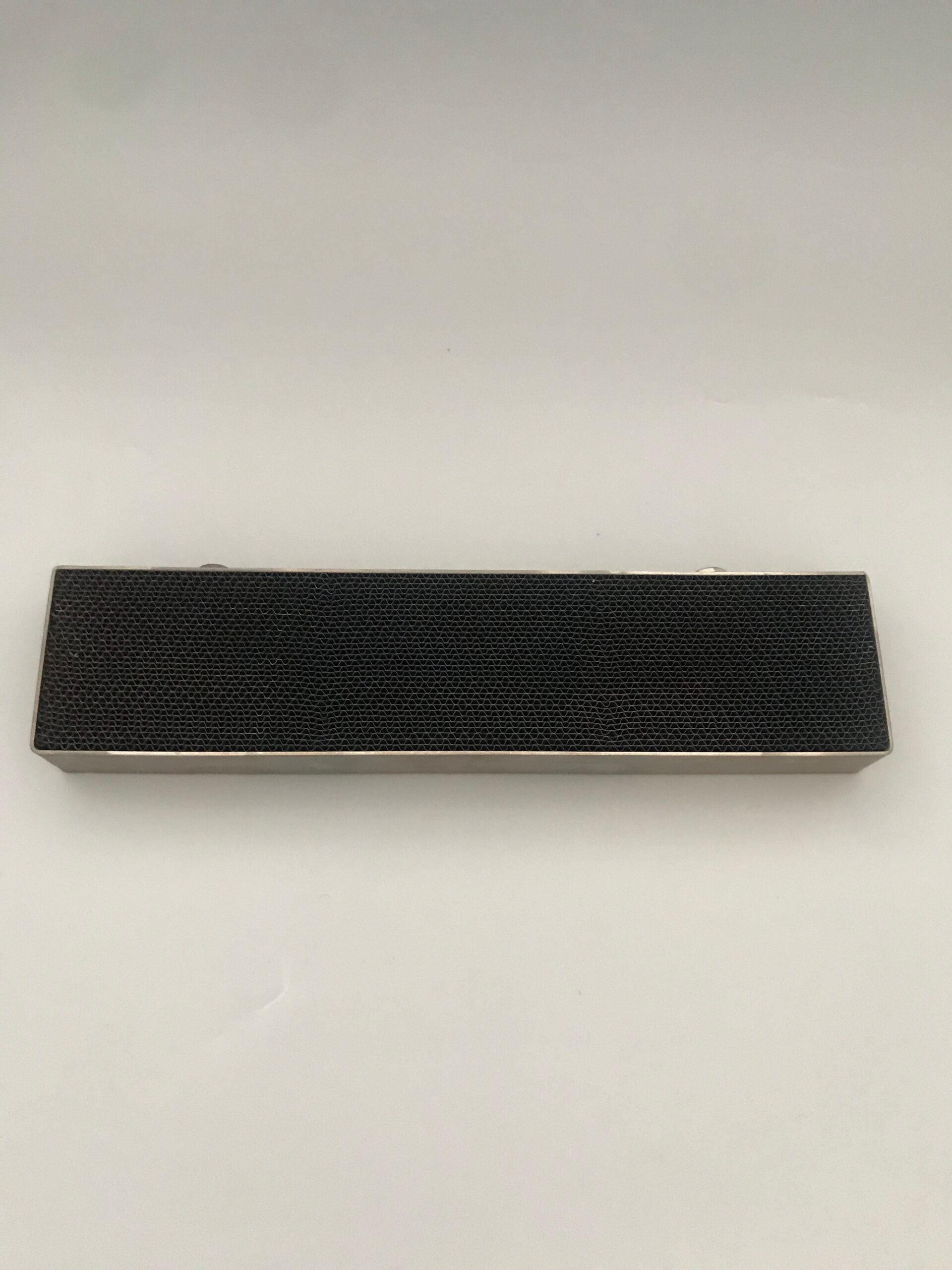
The size of a downstream filter remains tied to soot storage and regeneration demands after an upstream converter gains flow capacity. The engine’s mass flow, soot production, temperature profile, and allowable backpressure still set the filtration task.
A high flow catalytic converter is useful when its geometry and coating meet conversion needs without consuming too much of the available pressure budget. Diesel particulate filter manufacturers must size the DPF for that duty cycle.
The design sequence matters because flow resistance, filter volume, and regeneration are linked. A larger filter can offer more soot capacity but needs installation space and may have a different thermal response. A smaller filter may reach its loading limit sooner. The objective is a workable combination, not the lowest restriction in one component measured by itself.
Define the Converter’s Flow Envelope
Exhaust mass flow varies across engine speed and load. At higher rates, channel geometry and substrate length influence pressure loss and contact time. The coating still has to meet its conversion target at the temperatures associated with those flow points. A high-flow catalytic converter design is therefore defined by curves across the operating range rather than by a single claimed flow rating.
If a converter occupies less of the available system pressure budget, more margin may remain for the filter as soot accumulates. That relationship does not mean the filter can automatically be smaller.
Its required volume and wall-flow area also depend on particulate output, desired service interval, acceptable pressure rise, and regeneration conditions. The converter and DPF calculations should use the same engine data rather than separate nominal ratings.
At the first design pass, the engineer can bracket several converter geometries against one set of engine flow points. The remaining pressure margin then becomes an input to filter alternatives rather than an assumed benefit of a converter. A promising pair still needs installed testing, since pipes, bends, and sensor locations add losses absent from individual component data.
Size the DPF around Loading and Space
A filter must capture soot while allowing exhaust through porous walls. Its diameter, length, shape, material, and channel density influence flow area, storage behavior, and packaging.
Hualian Catalyst‘s DPF range includes round or square forms, custom dimensions, and 100–350 CPSI options. Diesel particulate filter manufacturers can use such parameters to develop alternatives, but identical CPSI figures do not guarantee identical pressure or capture behavior.
Diameter and length set the converter’s available envelope, while geometry and coating alter contact and restriction within it. These variables are customizable across Hualian’s metallic range of 50 to 600 CPSI, described for low backpressure and high-flow compatibility. Measurements across the target engine conditions resolve the pressure and conversion trade-offs between candidate builds.
Sizing should consider the filter when clean and after a representative amount of soot has accumulated. A clean-unit pressure figure alone misses the rise that triggers regeneration or limits engine operation. Shape can also affect how the filter fits a chassis or machine compartment. The available envelope may narrow the options before cell density or length is finalized.
Filter material and thermal response matter because the required regeneration strategy must fit the installed volume. A large thermal mass may warm differently from a smaller one, while local temperature distribution affects soot burn-off. Filter suppliers need to evaluate those effects with actual exhaust conditions, not merely extrapolate from a catalog size.
Packaging may force a shape with uneven gas distribution. The inlet transition must prevent local soot and heat concentration that leaves part of the nominal filter volume underused.
Connect Filter Size to Regeneration
Passive regeneration uses sufficiently hot exhaust conditions to oxidize soot during operation. Active regeneration adds heat when the duty cycle does not provide enough. The frequency and severity of either route depend on soot loading, available temperature, and the filter’s capacity. A change in DPF size can shift those relationships even when the upstream converter is unchanged.
Repeated low-load running can leave too little exhaust heat for soot removal, even in a low-resistance assembly. The converter’s coating and operating point affect the thermal conditions entering the DPF; a larger flow passage supplies no independent measure of regeneration heat.
Tracking measured inlet and outlet temperatures through each event, alongside pressure rise with loading, reveals how that thermal shortage changes the filter’s operating cycle.
Regeneration frequency is an outcome of engine soot production and available exhaust heat as well as filter capacity. If active events become frequent after a size change, the design may have traded installation space for a new operating burden. Diesel particulate filter manufacturers can compare alternatives only when soot loading and duty cycle are held consistent across the tests.
The final design needs one shared set of measured engine assumptions: flow, soot output, exhaust temperature, pressure limit, and installation envelope. Under those conditions, the high-flow catalytic converter can be judged for conversion and restriction, while the DPF is judged for capture, loading, and regeneration. Flow capacity becomes useful when those measurements show that the complete assembly remains within its limits throughout the duty cycle.
