Two jackets can contain similar filling yet deliver noticeably different levels of warmth. The reason may lie not only in the insulation itself, but also in the way it is held inside the garment. Stitching lines, quilt spacing, and panel construction influence how evenly insulation is distributed and how heat moves through the finished jacket.
Selecting an appropriate insulation layer material is only one part of the design process; quilting geometry can also affect thermal consistency, flexibility, and comfort. Y-Warm develops thin insulation solutions for apparel, making garment construction an important consideration when evaluating how different layers work together.
How Quilting Patterns Affect Heat Distribution
Quilting divides a garment into smaller sections, keeping loose filling from shifting during wear. The stitching creates boundaries that help maintain a relatively consistent distribution of insulation across the jacket. Without sufficient restraint, down or synthetic fill may migrate, leaving some areas with less loft and reducing the garment’s ability to retain warm air.
However, every stitch line also creates a potential thermal bridge. At these points, the insulation is compressed or displaced, allowing heat to pass through more readily than it does through the surrounding filled sections. The effect depends on stitch spacing, seam construction, fabric thickness, and the properties of the filling.
A jacket with narrow quilt channels may hold its insulation securely, but it also contains more stitching relative to its surface area. Wider channels reduce the number of compressed lines, although they may allow filling to shift if the construction does not provide adequate support. Designers need to balance insulation stability with the thermal consequences of the quilting pattern.
Channel Size, Stitch Spacing, and Insulation Loft
Channel width influences how much space is available for insulation to expand. Down relies heavily on loft to trap air, so narrow compartments may restrict its natural expansion if the fill quantity is not adjusted accordingly. Wider compartments can provide more room, but excessive spacing may cause uneven distribution during movement or after repeated use.
Synthetic fill behaves somewhat differently depending on its fibre structure and resilience. Some synthetic materials recover well after compression, while others may gradually lose loft under repeated pressure. Quilt dimensions should account for the filling’s thickness, recovery characteristics, and tendency to migrate rather than follow a standard pattern across every jacket design.
The choice of insulation layer material also affects the relationship between quilting and warmth. A bulky filling may require larger compartments to preserve loft, whereas a thin functional layer can be integrated with less dependence on deep quilt channels. The finished construction should be evaluated as a system, since stitching density and material compression can change the performance of individual layers.
Combining Thin Insulation with Down or Synthetic Fill
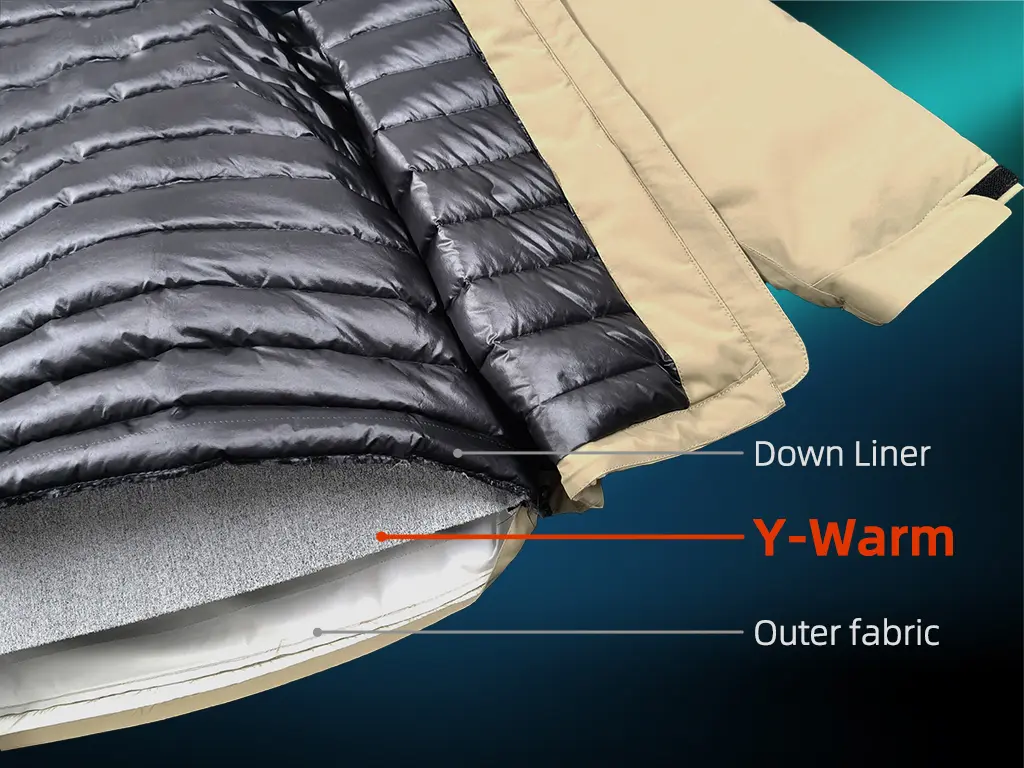
Layered jacket construction can assign different functions to separate materials. Down or synthetic fill creates loft and traps air, while an additional thin layer can help reduce heat conduction through the garment. The arrangement of these components matters: the outer fabric, insulation, filling, and lining must work together without unnecessary compression or restricted movement.
One example is Y-Warm’s recommended winter-jacket construction, which combines one thin layer with down or synthetic fill. The suggested arrangement places the fill against the lining and positions the thin insulation between the fill and outer fabric. This approach allows the lofted filling to provide additional thermal resistance while the separate layer contributes another barrier to heat transfer.
The sewing sequence also matters. The filling is first quilted to the lining, after which the thin insulation is attached to the outward-facing side of the quilted layer before the outer fabric is assembled. This reduces the need to quilt through every layer and helps preserve the intended position of each component. The result still requires prototype testing, particularly around seams, cuffs, shoulders, and other areas exposed to repeated compression.
Assessing Warmth Beyond the Stitching Pattern
A quilting pattern should not be judged by appearance alone. Thermal imaging can help identify cold spots around seams and compressed areas, while controlled thermal resistance tests provide a more measurable view of insulation performance. Comparing samples with different channel widths under the same conditions can reveal how much the stitching layout affects heat distribution.
Wear trials add another perspective. A jacket may perform well in a stationary test but feel less comfortable during active use if its construction restricts movement or traps excessive moisture. Designers should consider activity level, wind exposure, garment fit, and the expected temperature range when assessing thermal comfort inc. Warmth depends on the interaction between insulation, clothing layers, and the wearer’s environment.
Durability testing is equally relevant. Repeated bending, washing, and compression can alter filling distribution and change the condition of quilted seams. A reliable assessment of insulation layer material should include the way it performs after these stresses, rather than relying exclusively on measurements taken from a new, flat specimen. This helps identify whether the original design remains practical throughout normal garment use.
Conclusion
Quilting is more than a decorative feature: it determines how insulation is contained, where compression occurs, and how consistently warmth is distributed across a jacket. Channel dimensions, stitch placement, filling characteristics, and additional thermal layers all contribute to the final result. For apparel developers, thermal comfort inc is best assessed through a combination of material data, construction trials, and real-use testing.
Y-Warm focuses on thin, flexible thermal insulation for winter jackets, workwear, and other cold-weather apparel, offering an additional layer option for designs that combine lofted filling with reduced heat conduction. Learn more about Y-Warm’s material technology and consider its application in future insulated garment development.
