For most first-time hammock campers, the tarp question comes up the first time it rains. A hammock alone is essentially a suspended piece of fabric with no roof, and that gap between “sleeping off the ground” and “staying dry overnight” is exactly where a rain tarp traditionally comes in.
Whether a specific setup still needs one depends heavily on what kind of hammock system is actually being used, since not every modern hammock-based shelter leaves that gap open in the first place, and treating every hammock as equally exposed to weather can lead to either overpacking or, worse, being caught without protection when it actually matters.
Why a Bare Hammock Needs Extra Rain Protection
A traditional camping hammock is built around suspension and comfort, not weatherproofing. The fabric itself may resist some moisture, but it isn’t designed to shed sustained rain, and there’s no overhead structure blocking precipitation from landing directly on the sleeper. This is a fundamentally different problem than a ground tent faces, where the floor and walls are already sealed into one waterproof unit.
A hammock camper relying on a bare hammock alone is, in effect, sleeping in an open-air bed suspended a few feet off the ground — comfortable in dry weather, but exposed the moment conditions change, whether that change comes as overnight rain, morning dew settling on exposed fabric, or wind carrying moisture sideways rather than straight down.
What a Separate Tarp Actually Solves
A rain tarp strung above a hammock solves this by adding a dedicated waterproof layer without changing the hammock itself. Pitched correctly, it blocks rain from above and can be angled to redirect wind-driven moisture away from the sides as well.
The trade-off is added setup complexity: a tarp needs its own guy lines, stake points, or additional anchor trees beyond the two already holding the hammock, and pitching it correctly in wind takes more practice than most campers expect on their first attempt, particularly when trying to angle it low enough to block driving rain without sealing off airflow entirely.
This is the specific inconvenience that has pushed manufacturers toward integrated hammock-tent hybrids that fold weather protection directly into the sleeping structure.
Built-In Alternatives: When the Tarp Is Already Part of the Design
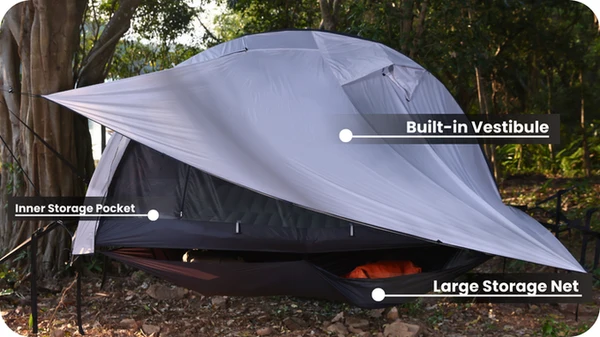
Some hammock-style shelters remove this extra step by building waterproofing into the structure itself rather than treating it as a separate add-on. THECATAL’s floaty hammock tent combines a suspended sleeping design with a waterproof shelter structure, bringing together the elevated sleeping position of a hammock and the weather protection of a tent.
For a shelter built this way, the traditional “do I need a separate tarp” question changes shape: the relevant check becomes whether the built-in waterproofing is rated for the conditions expected on a given trip, rather than whether any rain cover exists at all. Rather than requiring campers to purchase a separate tarp or add-on after buying a basic hammock. This reduces the need to select and pack additional shelter components, making preparation more straightforward.
For campers who prefer to keep their gear compact and organized, having these elements combined in one design can simplify both packing and campsite setup.
Ground Mode Changes the Calculation Too
Because the Floaty supports both suspended and ground configurations, the need for a separate tarp can vary even within the same shelter. When suitable anchor points are unavailable, the tent can also be pitched on the ground like a conventional tent, providing an alternative to suspended use without requiring campers to switch to a completely different shelter.
A camper switching between modes on the same trip is effectively switching between two different rain-protection situations, and it’s worth checking a manufacturer’s specifications for both modes rather than assuming performance is identical whether the tent is suspended or grounded, since ground contact and airflow patterns differ enough between the two that weatherproofing can behave somewhat differently in practice.
Sharing a Hammock Tent Without Doubling Tarp Needs
Traditional hammock camping doesn’t scale well for two people sharing a single rain solution, since two separate hammocks strung near each other typically also need two separate tarps to cover them both.THECATAL’s Hammock Tent For 2 features an adjustable interior zoning system that allows two occupants to organize sleeping and storage areas within one shared shelter.
A shared shelter can reduce the number of separate components needed for two-person hammock camping. However, campers should confirm that the two-person configuration provides suitable rain protection before leaving a separate tarp behind. Interior space and sleeping capacity alone do not establish how well a shelter performs in wet conditions.
Where THECATAL Fits Into This Broader Question
THECATAL approaches hammock camping from the perspective of an integrated shelter system. Its Floaty range reflects an alternative to the traditional hammock-and-tarp combination, giving campers another option when choosing gear for overnight trips. The choice ultimately depends on personal preferences, expected weather conditions, and how much flexibility campers want when configuring their shelter.
The Practical Answer
Whether a separate tarp is still worth carrying really depends on the specific hammock system and the conditions expected on a trip. A bare hammock without any built-in weather protection needs a tarp as a near-mandatory addition for anything beyond a dry, mild night.
An integrated design like the Floaty, built with its own waterproof structure, shifts that requirement toward checking the manufacturer’s stated weather rating rather than assuming a separate tarp purchase is automatically necessary.
Even then, some experienced hammock campers still carry a lightweight backup tarp for genuinely severe or unpredictable weather, treating it as a contingency rather than a core requirement — a reasonable middle ground that doesn’t rely on a single piece of gear performing perfectly in every possible condition.
