For homeowners and installers alike, timing the installation of home battery storage relative to a solar PV system can significantly affect costs, complexity, and performance. There are three distinct windows for adding BESS (battery energy storage systems) to a residential property: concurrently with new solar, as a retrofit to an existing solar array, or during a major electrical panel upgrade. Each scenario presents unique technical considerations and economic trade-offs.
New Solar Installations: The Ideal Timing
The most cost-effective and technically seamless time to install home battery storage is simultaneously with a new solar PV system. During a new installation, electricians can size the inverter, wiring, and panel capacity upfront to accommodate BESS without retrofitting components. The battery can be AC-coupled or DC-coupled depending on the inverter choice, and all permitting can be bundled into a single application. For homes with predictable evening peak loads or vulnerable to grid outages, concurrent installation avoids duplicate labour costs and ensures the system operates as a unified whole from day one.
Retrofit Projects: Adding Storage to Existing Solar
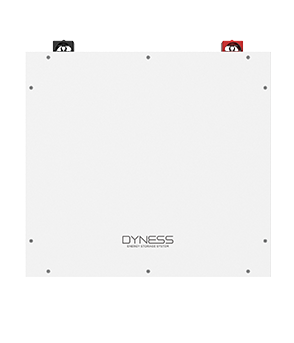
Many homeowners who installed solar several years ago now want home battery storage to increase self-consumption or gain backup protection. Retrofitting BESS to an existing PV system is entirely feasible, though it requires careful assessment of the existing inverter type. Older string inverters without storage-ready ports typically need an AC-coupled battery solution, where the battery has its own inverter that connects on the AC side of the meter. A retrofit is particularly worthwhile when utility net metering policies have degraded or when time-of-use tariffs create large price differentials between day and night. Dyness offers solutions such as the DL5.0C, a 5.12 kWh unit designed for residential and small commercial applications. With up to 50 units in parallel and an energy range from 5.12 kWh to 256 kWh, it supports a 1C discharge rate. This scalability makes the DL5.0C ideal for retrofits—installers can start with one or two units and expand later as household needs grow.
Electrical Panel Upgrades and Grid Service Opportunities
A third trigger for home battery storage installation occurs when a home requires a main electrical panel upgrade, often due to EV chargers, heat pumps, or increased load. At that moment, adding BESS can be cost-effective because the panel is already being modified. Furthermore, some homeowners choose to install batteries when their utility launches a virtual power plant (VPP) programme offering financial incentives for dispatchable storage. With high cycle times and a long lifespan, the DL5.0C ensures worry-free electricity consumption, making it a reliable choice for participation in such grid-service schemes.
Final Considerations for Homeowners and Installers
Determining when to install home battery storage ultimately depends on project goals, existing equipment, and local incentives. New solar installations offer the smoothest integration. Retrofit projects remain highly practical with AC-coupled BESS solutions like Dyness DL5.0C, which parallel up to 50 units for future expansion. Electrical panel upgrades and VPP programme launches provide additional windows of opportunity. Whichever timing suits the project, the key is matching the battery’s characteristics—capacity, discharge rate, and cycle life—to the household’s specific load profile and resilience needs.
